
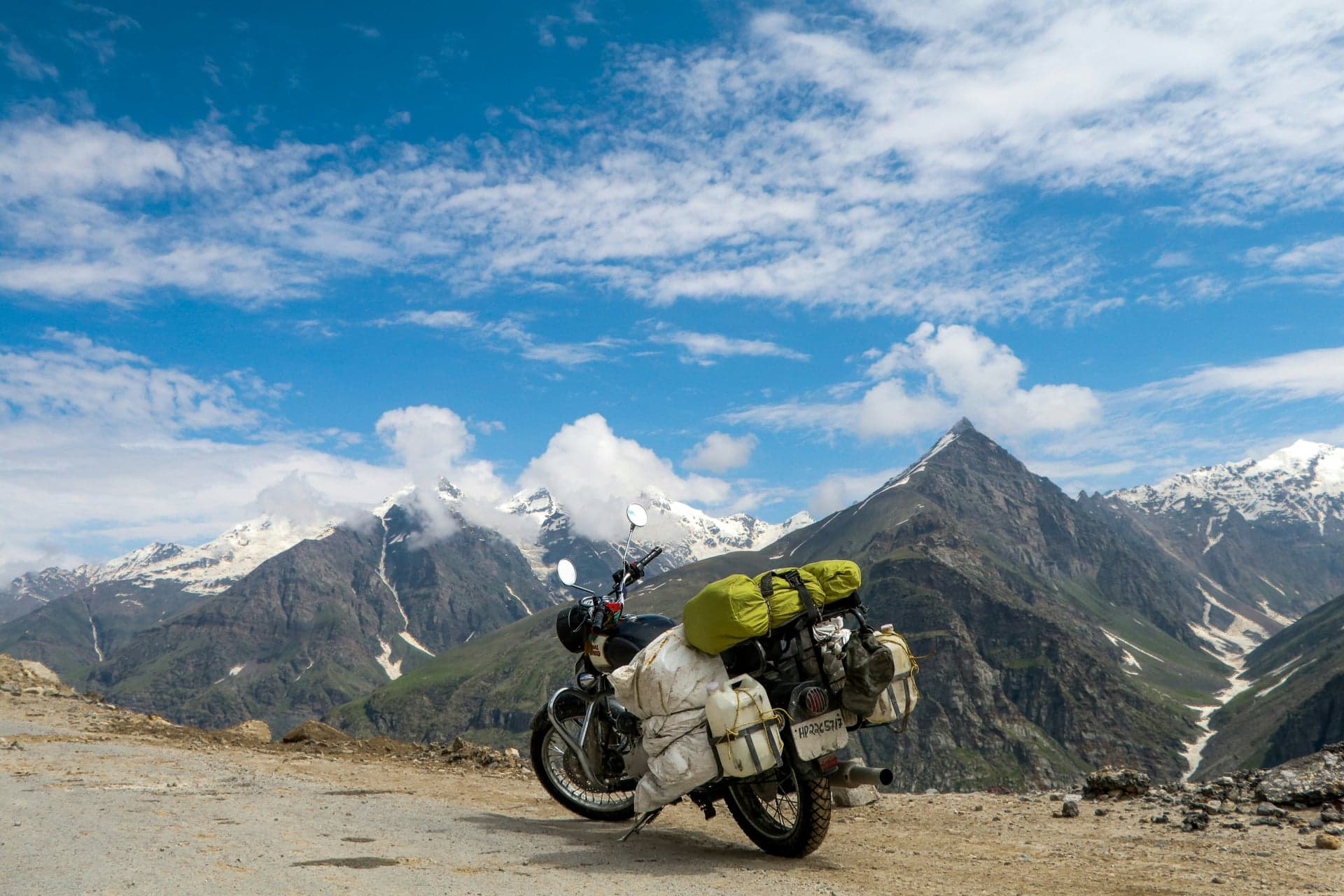
Packing for Ladakh is nothing like packing for a hill station. At 3,500 m and above, gear choices are dictated by altitude, UV exposure, dust, wild temperature swings, and the near-total absence of shops once you leave Leh.
1. A Layering System — Not One Heavy Jacket
The single biggest clothing mistake for a Ladakh trip: packing one bulky down jacket and calling it done. At noon in Leh during June, it can hit 25°C. By 10 pm, the same spot drops to 5°C. On the road to Pangong over Chang La at roughly 5,360 m, it can feel sub-zero at any time of year. A layering system handles all of this. Start with merino or synthetic thermals (top and bottom) as a base layer. Add a mid-weight fleece or a lightweight down vest. Top it off with a windproof, water-resistant shell — not waterproof Gore-Tex, which is overkill and traps sweat. This three-layer setup weighs less, packs smaller, and adapts to a 20°C daily temperature swing better than any single heavy coat ever will. Two sets of thermals are enough; they dry fast at altitude where humidity hovers around 20-30%.
2. SPF 50+ Sunscreen and Lip Balm with SPF — Altitude UV Is No Joke
UV intensity increases roughly 10-12% for every 1,000 m of altitude gain. At Leh's 3,500 m, that translates to about 35-40% more UV exposure than at sea level. At Khardung La (approximately 5,359 m), it is significantly worse, and reflection off snow or water at Pangong Tso compounds the damage. Sunburn at altitude can happen in under 30 minutes, even on overcast days. Pack a broad-spectrum SPF 50+ sunscreen — and actually reapply it every two hours. Lips are especially vulnerable. A standard lip balm without SPF protection is useless here; cracked, sun-blistered lips are one of the most common minor injuries travellers report. Bring a dedicated SPF lip balm and keep it in a jacket pocket, not buried in a bag.
3. Polarised Wraparound Sunglasses — Snow Blindness Is Real
This is not a style choice. Above 4,000 m, especially around snow-covered passes or the reflective surface of Pangong Tso, unprotected eyes face genuine photokeratitis risk — essentially a sunburn on the cornea. Symptoms include intense pain, tearing, and temporary vision loss, and they set in 6-12 hours after exposure. Standard fashion sunglasses with narrow frames let UV in from the sides. Wraparound polarised lenses with UV400 protection block peripheral light. For anyone planning a Ladakh bike trip, this is non-negotiable; wind, dust, and glare hit simultaneously at speed. A backup pair, even a cheap one, is worth its weight if the primary pair gets lost or scratched.
4. Diamox and a Basic Medical Kit — Leh Pharmacies Are Not a Backup Plan
Approximately 25-50% of visitors to Leh experience some degree of Acute Mountain Sickness. Headaches, nausea, and breathlessness usually start 6-24 hours after arrival at 3,500 m. Diamox (acetazolamide) is the standard prophylactic — it does not prevent AMS entirely, but it speeds acclimatisation and reduces symptom severity. A doctor's consultation before the trip is the right call, not a Leh pharmacy counter. Speaking of which: pharmacies in Leh exist, but stock is limited and prices are marked up. During peak season (July-August), common items like electrolytes and painkillers sometimes run out entirely. Pack paracetamol, ibuprofen, oral rehydration salts, an antidiarrheal, band-aids, and any personal prescriptions. For a deeper breakdown of altitude risks and the acclimatisation protocol, the altitude sickness guide for Ladakh covers what the first 48 hours should look like.
5. Cash — More Than Feels Comfortable
ATMs in Leh exist. They also run dry during peak season, sometimes for days. Outside Leh — in Nubra, at Pangong, along the Manali-Leh highway — there are no ATMs at all. UPI works at some Leh shops and restaurants but fails the moment network drops, which happens frequently. In Nubra, Pangong, or anywhere along the highway, assume zero digital payment infrastructure. Homestays, fuel stops, roadside dhabas, permit fees, emergency vehicle repairs — all cash. A reasonable estimate is to carry enough for the entire duration of the trip beyond Leh, plus a buffer. For context, a budget traveller might spend roughly INR 2,000-3,000 per day outside Leh, though that number shifts with vehicle hire, fuel surcharges, and the general inflation that comes with remoteness. For more granular Ladakh trip budget figures, the cost breakdown is worth reviewing before withdrawal day.
6. A 20,000 mAh+ Power Bank — Charging Is Unreliable
Homestays in Nubra and camps at Pangong often run on solar or limited generator power. Charging a phone overnight is not guaranteed — some places offer a single shared socket for an entire dormitory, and load-shedding is common. A 20,000 mAh power bank charges most smartphones three to four times. For anyone carrying a camera, GPS device, or running offline maps constantly, a 30,000 mAh bank is a safer bet. Charge the power bank fully in Leh before heading out. One detail people overlook: power banks lose capacity in cold temperatures. Keep it inside a jacket pocket or sleeping bag rather than in an outside bag pocket overnight.
7. A Reusable Bottle with Purification — Dehydration Kills at Altitude
Altitude dehydration is insidious. The air above 3,500 m is extremely dry, and the body loses moisture through respiration faster than at sea level. Drinking 3-4 litres per day is standard medical advice for acclimatisation. Buying bottled water works in Leh, but beyond Leh, supply is inconsistent and generates enormous plastic waste in a fragile desert ecosystem. A reusable bottle paired with purification tablets (chlorine dioxide tabs like Aquatabs work well) or a filter bottle like LifeStraw or Grayl handles stream water and questionable tap water. Bonus: it is lighter than carrying 3 litres of bottled water in a bag all day.
8. A Dust Mask or Buff — The Highway Demands It
The Manali-Leh highway is not a sealed road for most of its length. Long stretches between Sarchu and Pang are unpaved, and convoys of trucks and military vehicles kick up clouds of fine grit that hang in the air for minutes. Even inside a vehicle with windows up, dust gets in. On a motorcycle, it is relentless. A multi-use buff or neck gaiter — the kind that pulls up over the nose and mouth — weighs nothing and solves the problem. It also doubles as sun protection for the neck and a light head covering. Cotton bandanas dry too slowly and slip constantly; synthetic or merino buffs stay in place and wick moisture.
9. Dry Sacks and Waterproof Bags — Water Finds Everything
Rain is infrequent in Ladakh proper, but that does not mean gear stays dry. River crossings — where vehicles wade through actual streams on the road — are routine on the Manali-Leh route, particularly between Zingzingbar and Sarchu. Water splashes over wheel wells and through door seals. Vehicle roofs leak. And during the monsoon months of July and August, the Manali side of the highway sees real downpours before the rain shadow kicks in past Baralacha La. A few lightweight dry sacks — one for electronics, one for documents and cash, one for spare clothing — prevent the kind of damage that there is no way to fix between towns. They cost almost nothing and weigh even less.
10. Offline Maps — Because Zero Network Means Zero Network
BSNL and Jio have coverage in Leh. Outside Leh, connectivity drops fast. At Pangong Tso, Nubra Valley, Tso Moriri, and most of the highway stretches — nothing. No calls, no data, no GPS unless it is pre-downloaded. Google Maps allows offline map downloads by area; download the entire Ladakh region before leaving. Maps.me (now Organic Maps) tends to have better trail and unpaved road coverage for remote areas. For riders and self-drivers, this is orientation-critical. For passengers in a hired vehicle, offline maps still help track progress, estimate arrival times, and identify the next fuel stop or dhaba — information that matters on a 10-hour stretch with no signage.
11. Toilet Paper, Hand Sanitiser, and Wet Wipes — Non-Negotiable Basics
Between Manali and Leh, toilet facilities range from basic squat toilets at dhabas to open ground behind a rock. Toilet paper is not provided. Hand-washing facilities are rare. The same applies at many homestays in Nubra and camping setups at Pangong. A roll of toilet paper in a ziplock bag, a small bottle of hand sanitiser, and a pack of wet wipes take up almost no space and prevent a disproportionate amount of discomfort. This is not about luxury — it is about hygiene at altitude, where even a minor stomach issue becomes serious when combined with dehydration and AMS.
12. Snacks and Electrolytes — Highway Food Stops Are Sparse
The stretch between Sarchu and Pang on the Manali-Leh route runs roughly 80 km with one or two seasonal tent dhabas that may or may not be open. Similar gaps exist on the Pangong and Tso Moriri circuits. Energy bars, trail mix, dry fruits, and glucose biscuits fill the voids between proper meals. More importantly, electrolyte sachets — brands like ORS, Enerzal, or fast&up — help combat altitude-induced dehydration far better than plain water alone. Pack enough for at least one sachet per day of the trip. These weigh grams and make a material difference to how the body handles sustained time above 3,500 m.
13. The Stuff Worth Leaving Behind
Heavy jeans are a common mistake. They are rigid, slow to dry, and miserable to wear on long vehicle days over rough roads. Cotton t-shirts absorb sweat and stay wet, which turns dangerous in cold wind at altitude. Large hardshell suitcases do not fit on motorcycle panniers, barely fit on Innova roof racks, and are a liability on the list of common Ladakh mistakes. Hair dryers are dead weight — power supply is too inconsistent to use them, and the dry air means hair dries within minutes anyway. The same goes for laptop chargers for most travellers, formal footwear, and heavy books. A soft duffel bag or a 50-60 litre rucksack is the right luggage format. If it does not fit in that, it probably does not need to come.
A useful test: for every item, ask whether it solves a problem specific to altitude, UV, dust, cold, or remoteness. If the answer is no, it is probably dead weight above 3,500 m.
| Category | Pack | Skip |
|---|---|---|
| Clothing | Thermals, fleece, wind shell, buff | Heavy jeans, cotton tees, bulky jackets |
| Protection | SPF 50+, lip balm with SPF, wraparound sunglasses | Fashion sunglasses, low-SPF lotion |
| Medical | Diamox, painkillers, ORS, first-aid basics | Relying on Leh pharmacies |
| Tech | 20,000 mAh+ power bank, offline maps | Laptop, hair dryer, extra chargers |
| Essentials | Cash, dry sacks, purification bottle, toilet paper | Large suitcases, formal shoes, heavy books |
| Food | Energy bars, dry fruits, electrolyte sachets | Perishable snacks, heavy canned food |
Ladakh rewards the traveller who packs light and packs right. Every item on this list addresses a condition — altitude, UV, dust, cold, remoteness — that does not exist at the same intensity anywhere else on a standard Indian travel itinerary. The gear that matters weighs less than the gear that does not. A soft bag under 15 kg, the right layers, enough cash, and a charged power bank cover 90% of what the region demands. Everything else is a trade-off between comfort and mobility — and at 5,000 m on an unpaved road, mobility wins every time.
```Written by